


Myrtus communis: Your Ideal Choice for Sustainable Landscape Projects in Egypt
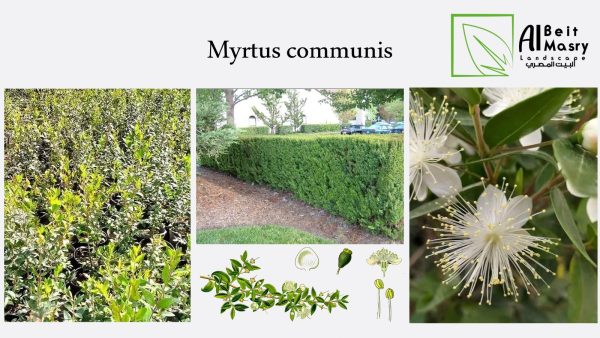
As part of the continuous expansion of landscape projects in Egypt, and in line with state directions toward sustainability, pollution reduction, and the preservation of natural resources, AlBeit AlMasry Landscaping is moving toward producing and cultivating local plants capable of adapting to various environmental conditions, most notably the Myrtus communis plant.
Appearance and Botanical Characteristics
Myrtus communis is an evergreen shrub characterized by its small leaves and dense, branching growth, giving it a consistent aesthetic appearance year-round. The plant belongs to the Primulaceae botanical family and is characterized by its high tolerance for pruning and shaping while retaining its density and aesthetic form for long periods.
Key Features of the Myrtus communis Plant
-
Tolerance of drought and low temperatures.
-
High tolerance for irrigation water salinity up to 2,500 parts per million (ppm), making it suitable for use in coastal areas and North Coast projects.
Applications in Landscaping
The Myrtus communis plant is used in many landscaping applications, where it is employed in:
-
Creating plant hedges.
-
Topiary work.
-
Defining pathways, agricultural basins, and green borders, thanks to its dense growth and ease of shape maintenance.
The Role of AlBeit AlMasry
AlBeit AlMasry continues to rely on local and environmentally studied plants to provide sustainable landscape solutions that combine beauty, efficiency, and adaptability to various climatic conditions. The company also pays special attention to propagating and caring for the Myrtus communis plant within its private nursery, with the aim of preserving this local plant and enhancing its spread in projects.